

I shared an office with a distinguished older gentleman who was many times more, or less, the man than met the eye. A smaller man but a towering intellect, immaculately dressed, and a sly sense of humour, with a propensity for lickerous limericks.
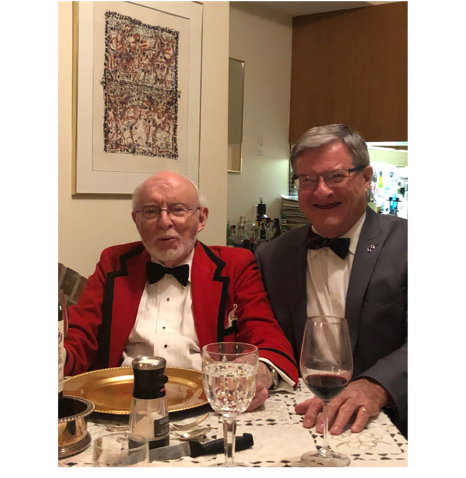
JFW came from a privileged family and enjoyed a comfortable life growing up in the 1940s Toronto. Privileged perhaps but he also had to make his own way. He was educated at a prestigious private school in Toronto – possibly because his mother was bright and had ambitions of her own; a scrawny little kid, likely bullied, incongruously he claimed, to have served as an army cadet in Camp Borden and as a car jockey at the Canadian National Exhibition in its three-week August run each summer. He subsequently earned a degree from Trinity College of the University of Toronto in philosophy and then progressed to U of T Faculty of Law.
He was called to the bar in Ontario, but never practiced law per se. Instead, he somehow got into the labour dispute world and for much of his career operated as an independent professional, as a labour arbitrator. Over the 50 plus years of an illustrious career Mr. W. must have delivered hundreds and hundreds of labour arbitration decisions.
Except for his time articling in a law firm, he was never an employee in a private corporation or government, though later in his career served a short spell heading up a government agency. He made ‘good money’, as they say, especially in the halcyon days in private practice in Toronto. He also enjoyed the benefits of two tidy inheritances and the lifestyle one might expect of a prosperous gentleman: frequent upscale lunches and dinners, world travel, especially to his favourite cities, Paris and London; fine wine, the occasional cigar and his daily martini. In short, he lived a happy life (though no doubt not without some of the usual life crises we all suffer through from time to time, usually having to do with family).
His fortunes shifted somewhat when he moved to Ottawa – not to say there are shoals in Ottawa upon which one’s career might founder but he found life there a bit more confining.
When I met him he had just re-launched his labour arbitration practice in Ottawa and leased an office suite in the Delta Hotel Office building. I had been building a consulting practice of my own (human resources advisor, career counselor and executive coach, if not an all-around factotum) and I was in need of an office; I invited myself to become his roommate. We made for strange bedfellows, though there was a certain logic to it (labour relations and employee relations, if you will), though in reality the only thing we did together was the occasional lunch and worry about paying the rent.
The literate lawyer and I, the career counsellor (also aspiring author), often spent time at lunch, or in the office library, discussing literature and language and consulting thereto various reference books, or, latterly, google! My roommate had a prodigious memory and could quote at will from any number of things he had read – quite scary for a pretender such as myself.
All of this is prelude to the tale I want to tell about Wilkins Micawber.
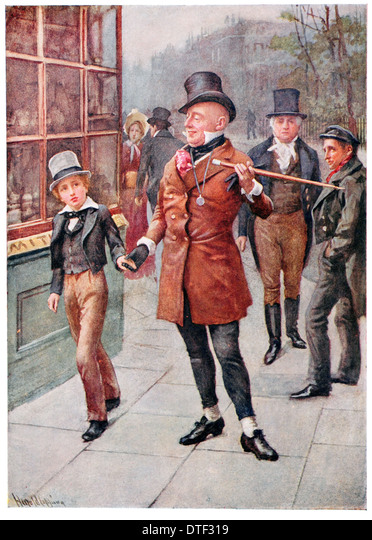
Any literate person in English will have read some of Charles Dickens, or at least heard of him (oh come now: Mr. Scrooge in A Christmas Carol?; A Tale of Two Cities (‘It was the best of times, it was the worst of times’)?; Oliver Twist (“Please sir, may I have some more?”)? No? Well, Mr. Micawber was one the more memorable characters in Dickens semi-autobiographical novel, David Copperfield.
Wilkins Micawber may in fact have been patterned after Dickens’ own father; fancied himself a gentleman and presented himself as such, though perhaps a little ragged; in and out of the poor house the best part of his life. He was of unknown education but rich in vocabulary and aphorisms; his ambitions and his lifestyle chronically exceeded his means, though his long-suffering wife stood by him. Micawber’s formula for happiness was entirely pecuniary:
‘Annual income twenty pounds, annual expenditure nineteen nineteen and six, result happiness. Annual income twenty pounds, annual expenditure twenty pounds nought and six, result misery.’
Written in full, the formula stipulates that for happiness, expenditure must be less than income! If income twenty pounds and expenditure nineteen pounds, nineteen shillings and sixpence (£19/19/6), happiness; expenditure of £20/0/6 results in misery. (In modern British decimal currency there are no shillings so the cause of misery would be expenditure, 20 pounds and 2.5 pennies.)
Micawber chronically hovered on the misery side of the scale. But Micawber was an optimist and ever hopeful that misfortune was only temporary: ‘Something will turn up!’
I’m not suggesting that my erstwhile roommate, Mr. W., was in any material way like Mr. Micawber, nor even that he spent time in his cups to avoid facing up to his reality, only that Mr. W. was a self-employed professional, as was I, and that meant cash-flow can be irregular. That is to say, revenues may be uncertain but expenses are largely constant: the rent must be paid on the first of every month; the phone bill and the internet bill come monthly, as does that credit card statement with all those lovely luncheon expenses listed.
Mr. W. may have been an iconic arbitrator but he was a reluctant salesman, and in that dimension was I similarly. I networked more extensively than he did but was tentative with ‘the ask’ and ‘the close’; lunching with potential clients is not sufficient to the art of the deal. So when our respective calendars were only intermittently filled with contracts, expenses frequently exceeded income and the ‘Micawber Principle’ was in play.
All this drama played in the background.
The arbitrator and the coach may have shared the rent and the occasional musing about the tentativeness of life, but rarely shared money worries, and then only obliquely; typical of reserved English Canadians, we didn’t really talk about it, merely mumbled hints at the state of our respective billable hours. The lawyer, or the performer, in one or the other of us would resort to quoting our favourite Dickenson character, Wilkins Micawber.
‘Something will turn up.’
For Wilkins Micawber, something did turn up: he emigrated to Australia, became a bank manager and a magistrate.
For Mr. W., he found his great reward in 2020.
As to your faithful reporter, I am still hopeful that the expected good fortune will yet arrive, but it better come soon as the creditors are all barking at the door.
And with that, I wish all my faithful readers, and myself, a Happy New Year and a very prosperous 2026!
Doug Jordan, reporting to you from Kanata
© Douglas Jordan & AFS Publishing. All rights reserved. No part of these blogs and newsletters may be reproduced without the express permission of the author and/or the publisher, except upon payment of a small royalty, 5¢.
